



Connecticut Women Who Lead With Vision and Heart
By Alix Boyle
It takes a leader to identify problems and come up with solutions. And it takes heart to lead with love and compassion. Here are four Connecticut women who are working on solving a variety of problems in business, philanthropy, social connection and legislative change.
Kristin Song

Kristen Song of Guilford lost her son, Ethan, on January 31, 2018 when the 15-year-old went over to a friend’s house and died from a gunshot wound to the head. The guns in the home were unsecured.
“My journey of heartbreak is getting crowded,” says Song, referring to the increasing numbers of deaths of children by firearm. Guns are now the number one killer of children, and those deaths are preventable.

A mother of three and a lawyer by training, Song believes the best way to honor Ethan is to act to make children’s lives better.
Shortly after his death, Song painted an “honor wall” in her office. On it, she wrote 50 things to do in Ethan’s honor. The first was simply to get out of bed.
In less than a year, Song, along with her husband Mike and some supporters, got Ethan’s Law passed in Connecticut, mandating that all firearms, loaded or unloaded, must be safely stored to prevent access by kids under 18. The law also applies to guns stored in cars and homes. On what would have been Ethan’s 16th birthday, the law was introduced at the federal level.
Song is working on getting safe storage laws passed state by state — like Bennie’s Law in New Mexico — including in New Hampshire, Maine, Vermont, Rhode Island, Delaware, Virginia, New York, Nevada, New York, Washington, Oregon, Colorado, Connecticut, Maryland, Michigan and New Mexico passing some form of a safe storage law. She’s currently working on Illinois, Georgia, Pennsylvania, Minnesota and Wisconsin as well as strengthening the existing law in New York. “I did not work with every state; but through collective folks, we have raised the issue to be front and center,” explains Song.
The grief and heartbreak of losing a child never gets any easier, just different. “You wonder who they would be,” she says. “Would Ethan have been in love? Would he have followed his vision of the future with college, then the army, then marriage and seven kids? Ethan was deeply committed to protecting marginalized people. He had empathy beyond his years.”
After Ethan died, one parent wrote to the Songs and told them how Ethan befriended their child, who was being picked on at school. Another said Ethan included a child with a disability at his lunch table. He fostered 95 dogs, took great pride in his Jewish heritage (his grandmother was a hidden child during the Holocaust) and was interested in helping veterans. The family established the Ethan Miller Song Foundation as a place to work on projects that help children and have some connection to Ethan.
“There’s no manual for how to survive the death of a child,” says Song. “I was suicidal and action saved me.”
Ellen Siuta
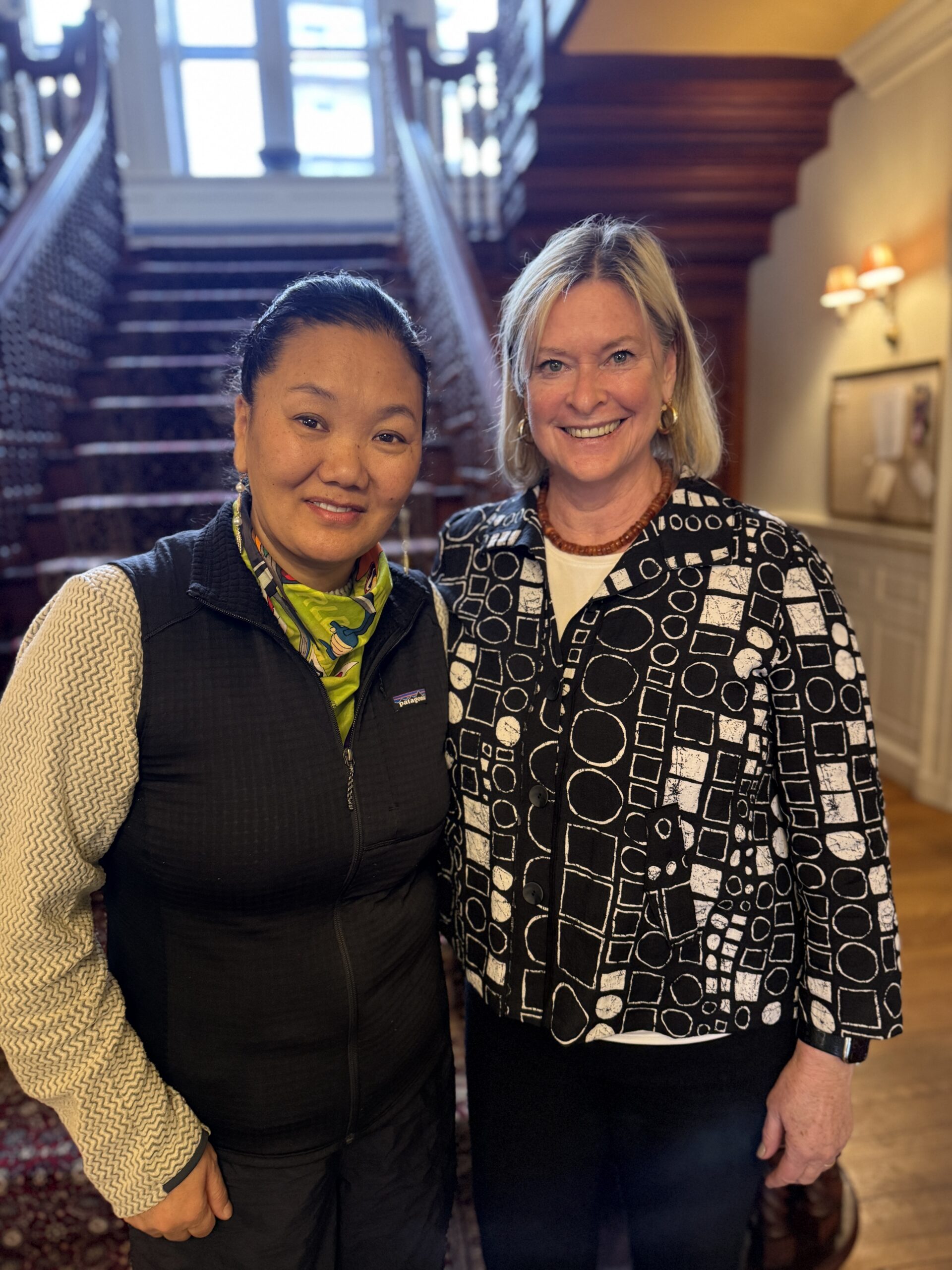
With the increased reliance on social media to stay in touch, there are fewer opportunities to get out and meet people face-to-face for career networking or socializing. That’s where the Town & County Club (T&C) in Hartford comes in. It’s a third space — not home, not work — where women can come together to dine, attend a happy hour, learn from a speaker, or sit by the fire in the library with a glass of wine or cup of coffee.
Current president Ellen Siuta of Farmington aims to increase membership and to be inclusive, hoping to attract a wide variety of women. Currently, the women’s club has about 200 members from their 30s to their 90s whose professions range from artists to doctors.
“The first thing I do is address what I can’t do, what I need and who I need to empower,” Siuta states of her leadership style. “As women leaders, we have to identify our gifts, but also our weaknesses. And I am okay with identifying my weaknesses. I have a wonderful partner in our general manager, and I believe in letting her do her job.”
Loving the people and the organization is key. “I love the women here,” she says. “Once I took over as president, I feel like they’re all my friends, and I’m responsible for them. I’m very appreciative of the women that helped me, because you can’t you lead alone.”
In addition to being focused on attracting new members and retaining current ones, Siuta is also marketing and rebranding the club. She created a marketing committee and recently oversaw a new website launch.
Founded in 1925 by a group of suffragists, the club is located in the Lyman House on Woodland Street, a stone’s throw from the Mark Twain House. In addition to events and activities, it offers workspaces and overnight guest rooms, including one called the Barbara Bush room.
Siuta was wrapping up her tenure as chair of the Farmington Board of Education when a friend, who was a T&C member, suggested she get involved.

“Because we’re a sisterhood here, there’s a natural networking that happens all the time. Because we’re always looking out for each other,” Siuta continues. “We’ll always pull up a chair for you.”
Karen DuBois-Walton
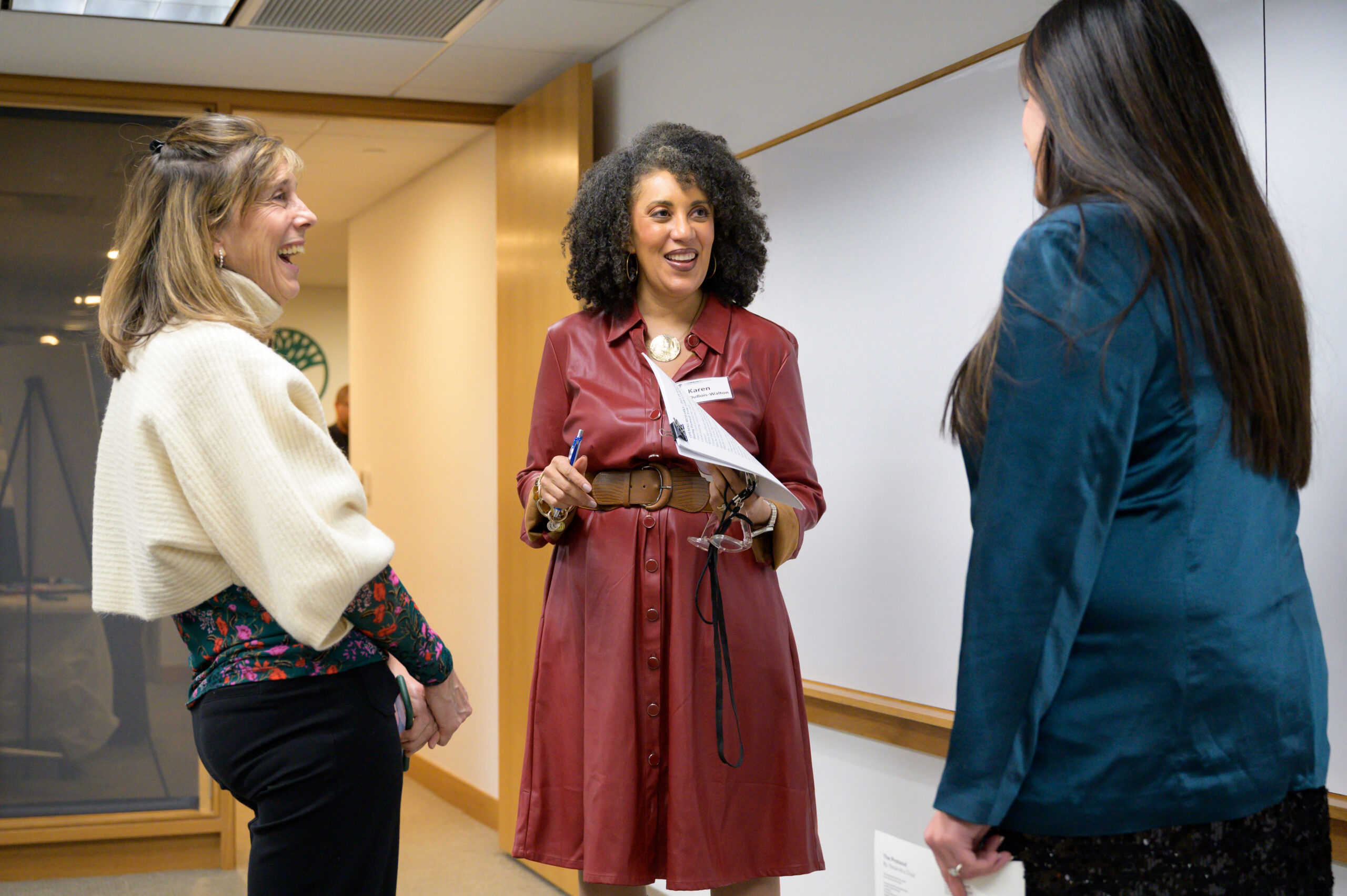
As president and CEO of the Community Foundation for Greater New Haven, Karen Dubois-Walton is responsible for a $700 million endowment that distributes $30 million a year to nonprofits in the 20-town area in and around New Haven. She leads a staff of 48. But more than dollars and cents, Dubois-Walton is using her background as a clinical psychologist to bring people together, both inside and outside the organization.
“We had a day of racial healing after the Martin Luther King holiday,” she says. “These three floors were buzzing with people who came together around what we think builds strong community. Especially in times when there’s so much division at the national level, or even locally, it’s a time where community foundations are particularly well-positioned to try to build civic health, build a sense of connection and community.”
Many of the grants the foundation makes are to organizations that help with basic living needs like food pantries as well as organizations that help immigrants, like IRIS and Junta for Progressive Action.
One year into the job, Dubois-Walton has implemented a new strategic framework. She’s building the competency of the people who work at the community foundation in their knowledge of philanthropy as well as their knowledge of the communities they serve, helping them understand and live the core values of the organization and to understand their own strengths and the strengths of those around them.
“Leadership is about the ability to inspire others to want to learn more, do more, be more, become more. And that happens through people, not through the book I gave you, not through the course that I that I gave you, right? But it’s through that connection. And I also lead through an equity lens.”
Employees need to understand the 20 towns they serve because they are very different places.
“You have to understand and live our core values, because we say very colloquially, ‘we need to be who we say we be,’” Dubois-Walton says.
Small businesses can also receive help from the foundation. Dubois-Walton noticed that the foundation was not serving many Latino businesses, so she sent foundation staff down to Grand Avenue in New Haven, which is known for new immigrant and Latino businesses. They went literally door to door with Spanish-speaking staff, talking to business owners about what they could take advantage of. A few bakeries, barbershops and restaurants took them up on it.
“Our people are our greatest resource,” she concludes.
Marietta Lee
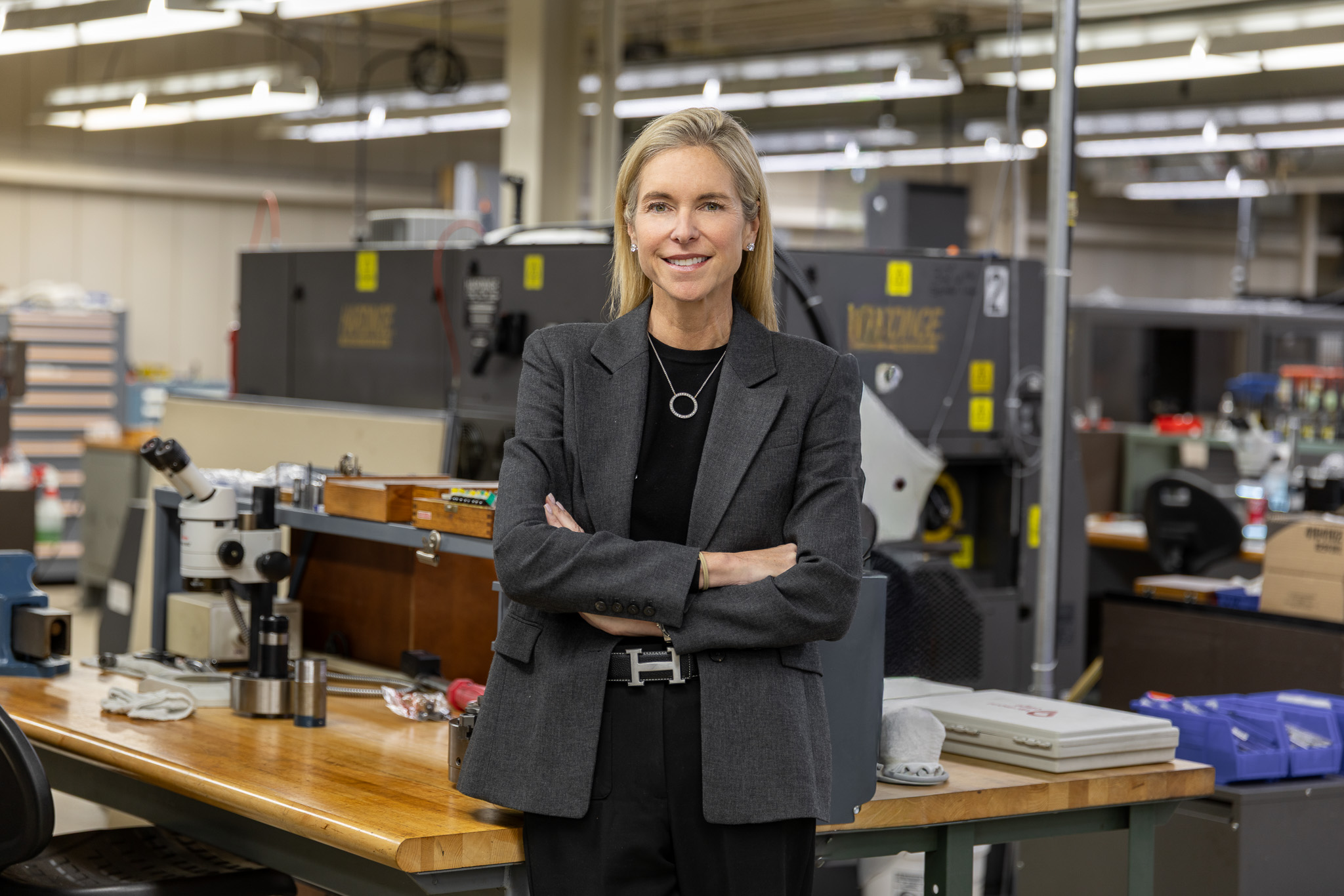
Marietta Lee, CEO of the Lee Company, which manufactures parts for the aerospace, medical and automotive industries, is on a hiring blitz.
In Connecticut, there are about 73,000 open jobs. But the labor force is shrinking, Lee says.
“People are moving out of state. People are retiring from the labor force, and if you hired every single unemployed person in the state there would still be job openings,” she explains. “Connecticut needs to attract more workers.”
The Lee Company offers a generous salary and benefits package, including profit sharing and a contribution toward daycare. But there is a crisis of affordable housing and day care in Connecticut. Until that is solved, potential employees won’t want to work here, she says. “We can make change, but I think it’s slow. I think things have to start happening now. Multifamily homes and apartment buildings need to be built now in order to have any positive impact within this decade.”
Lee, 56, has worked at the company her grandfather founded in the 1950s for 25 years, three as CEO. Among other things, the company is known for the Lee plug, a part that inserts into a hole in an airplane manifold.
“Any airplane that flies in the free world probably has hundreds, if not thousands, of our parts in them. You never see them. You don’t know that they’re there, but we’re sort of everywhere. Most of the parts are in critical applications so we go for the highest quality parts, zero defects, because any failure could be catastrophic,” she says.
A former newscaster with a law degree and a master’s in engineering management, she leads 1,100 employees in Connecticut. The company has sales offices around the world. Women CEOs are rare in her industry.
“I try my hardest to surround myself with people who are smarter than me. I am the first one to acknowledge that I don’t know all the answers, but I have a team of people behind me who do. I want them to challenge me if I’m doing something that they disagree with,” she describes about her leadership style.
And when she retires, Lee states she would love to run for office.
“I have so much respect for the politicians who dedicate their lives to public service, because change is slow,” she concludes. “It took the state a long time to get in the mess that they’re in, and it’s gonna take us a long time to get out of it.”
More Stories
League of Their Own: Connecticut Women Tackle Football
The Lessons of a Summer Job That Last a Lifetime
Scuba Divers Are Sinking to New Lows for Golf Balls