


Festive Escapes Beyond the Usual: From Gibraltar Sunshine to Montenegro Ski Slopes
By Anastasia Mills Healy
As we experience our summers now, we put forth some unexpected options for travelers craving a fall or winter European getaway without the predictable crowds. Imagine skiing affordable powder in Montenegro, sipping afternoon tea and doing tax-free holiday shopping among the palm trees of Gibraltar, wandering atmospheric Christmas markets in Riga without shoulder-to-shoulder crowds, or welcoming the new year in a turreted Scottish castle. These destinations combine seasonal traditions with distinctive local culture, offering everything from British-style Christmas celebrations in the Mediterranean to Balkan ski adventures and cozy Old World charm — often without the high price tags and stress of Europe’s better-known holiday hotspots.
Ski for €25 a day in Montenegro
It’s worth traveling to the Balkans in winter for stunning alpine scenery, guaranteed snow and €25 lift tickets (and for bragging rights). A small country on the Adriatic between Croatia and Albania and bordering three other countries inland, Montenegro was part of Yugoslavia and is best known as a hopping summer destination. It is vastly under-touristed in winter as skiers flock to the better known French, Swiss and Italian alps.
Only an hour from Podgorica Airport on the coast, the town of Kolašin is the largest ski area in the country. Set 3,000 feet above sea level on Bjelasica Mountain, Kolašin has two connected ski centers: Kolašin 1450 and Kolašin 1600, referring to their elevations (4,757 and 5,249 feet). They are surrounded by numerous smaller ski areas and development is ongoing, so now is your chance to go before the world discovers it.
Both ski areas have a range of runs with varying levels of difficulty as well as “freeride zones,” where the more advanced and adventurous can ski off-trail in virgin snow. Snowshoeing, Nordic skiing, snowmobiling, helicopter tours and more are also possible.

From the end of December to the end of January, a Christmas bazaar in Kolašin’s Soldiers’ Square tempts shoppers with artisanal jewelry, crafts and clothing. Live music and traditional food and drink like priganice (deep-fried dough balls) and mulled brandy add to the fun.
More information at kolasin.com and montenegro.travel/en.
British Holiday Traditions with Sunshine in Gibraltar
At the southernmost point of Europe, where the Mediterranean meets the Atlantic, Gibraltar is an unexpected holiday escape. As a British Overseas Territory, English is the official language and English holiday traditions are observed. The winter weather is mild, with daytime averages in the low 60s, and shopping is tax-free.
Visitors can hike the famous Rock of Gibraltar, dine outdoors along waterfront promenades and enjoy seasonal celebrations. Kicking off the festive season in November, the Christmas Festival of Lights centers on flipping the switch on the thousands of lights that illuminate Main Street and Casemates Square. Throughout December and into January, John Mackintosh Square is a family-friendly hub with rides, entertainment and traditional fried pastries called buñuelos. Gibraltar is largely Catholic and marks Three Kings Day in January with a parade with floats and marching bands.
Gibraltar’s population of around 30,000 is a unique cultural mix of British settlers and people with Spanish, Moroccan, Maltese, Jewish and Indian heritage, among other backgrounds. At Christmas time, British traditions such as Christmas carols and Christmas crackers can be found along with varied culinary influences and customs from the diaspora, and day trips to the Costa del Sol and Tangiers, Morocco, are possible.
In addition to experiencing Christmas with palm trees and European customs, winter is a great time to visit Gibraltar’s top attractions like the WWII tunnels and Skywalk without summer cruise ship crowds.
More information at visitgibraltar.gi.
Christmas Markets Without the Crowds in Riga
Vienna, Strasbourg and Cologne draw crowds from all over the world for their Christmas markets, which can result in lines five deep to peruse the stalls and 10-minute waits for glühwein (mulled wine). An alternative is Riga, the capital of Latvia, which is a member of both the European Union and NATO. Another plus is that the euro’s buying power here is strong, with prices that can be a third of other European destinations.
The city’s main Christmas market will be open from November 27, 2026, to January 3, 2027, in Dome Square. Wander among the wooden stalls stocked with locally handcrafted items like gloves and candles, try Latvian food such as duck sausages and dumplings, and visit with Santa as well as hear music from choirs, folk groups and DJs. There’s also a good possibility of snow, adding to the festive atmosphere.
With a population of 615,000, Riga is the largest city in the Baltics and about the geographical size of Dublin. Founded in 1201, Riga boomed during its Hanseatic League trade years. Today, visitors can follow the narrow, cobblestone alleys of its Old Town, a UNESCO World Heritage site, to see centuries-old gothic architecture and remnants of ancient fortifications. Riga is also one of the best places in the world to see Art Nouveau architecture, with 800 beautiful buildings in this style, mostly in the city center.
Riga also has a robust cultural scene with museums exhibiting traditional and contemporary art as well as unique sites like the former KGB headquarters, Museum of the Occupation and collections that focus on decorative arts, fashion, hats and vintage cars.
More information at liveriga.com.
Live like a Laird at a Scottish Castle
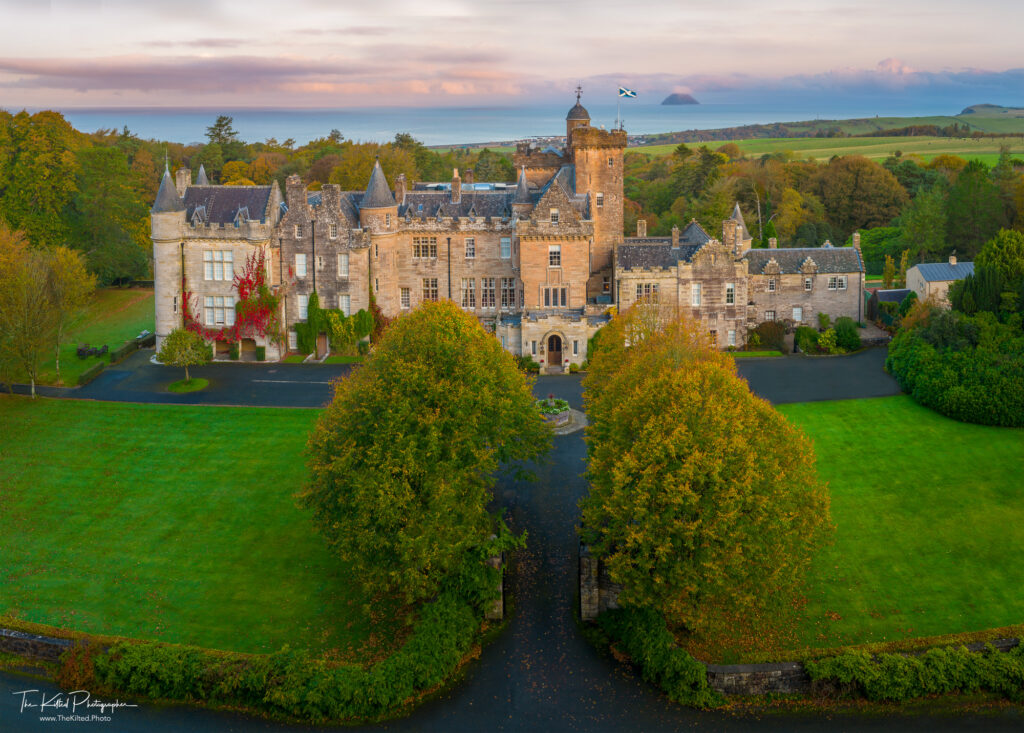
Dressed in tweed and wellies, outstretch your gloved hand and brace for the landing of a sea eagle. Or, with a magnificent castle as a backdrop, aim your longbow at an archery target, learn how to curl or meet the resident Highland “coos” at Glenapp Castle, a 19th-century Scottish Baronial luxury hotel complete with turrets, towers and battlements.
A Relais & Châteaux Michelin key property, Glenapp succeeds in creating fairytale experiences whether you’re an adventure seeker (kayaking, mountain biking), family with children (treasure hunts, wildlife encounters) or couple seeking a quiet romantic getaway (suites fit for royalty, crackling fireplaces). Only 17 of its 73 rooms are guest accommodations (culminating in the 4,500-square-foot Castle Penthouse Suite) so there’s never a fight for a table at any of its restaurants.
Glenapp Castle sits near Scotland’s southwest shore with access to its windswept western isles made easy with a boat at the ready. Nearby lochs reward anglers with trout and seeing that this is Scotland, golf courses and whisky distilleries are never far away. Tennis and yoga are offered on property and clay pigeon shooting and horseback riding on the beach at nearby Turnberry.

The castle goes all out during the festive season with towering trees, special menus and traditional ceilidh (live music and dancing). New Year’s revelers can sing “Auld Lang Syne” just minutes from the birthplace of its writer, Robert Burns.
Glasgow Airport is a 90-minute drive; Edinburgh Airport is two-and-a-half hours away.
More information at glenappcastle.com.
Anastasia Mills Healy is a Greenwich-based travel writer and author of “100 Things to Do in Connecticut Before You Die” and “Secret Connecticut: A Guide to the Weird, Wonderful, and Obscure.”
More Stories
SAYBROOK POINT RESORT & MARINA: The Beauty of Old Saybrook in the Fall: It Lingers Longer Here
Fresh Alternatives to Popular Vacation Spots: Pick a Direction and Get Ready for a Memorable Trip
Europe in the Spotlight: Why These Destinations Should Be on Your Radar This Year